
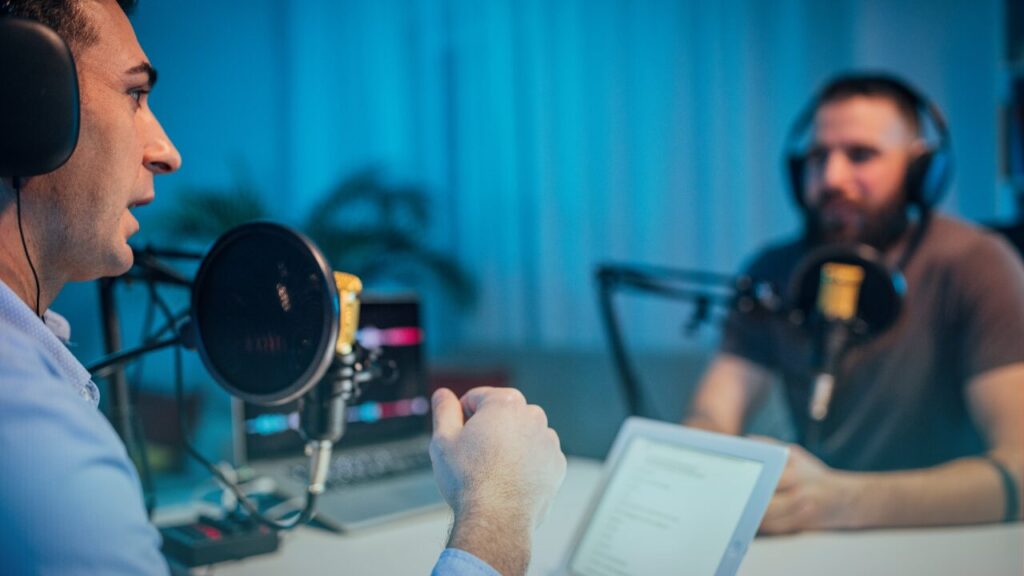
One of the most common questions in podcasting is still:
“How long should a podcast episode be?”
30 minutes?
An hour?
Three hours?
Short-form only?
The interesting thing is that podcast audiences have become far more flexible about episode length than they were a few years ago.
But that doesn’t mean duration no longer matters.
It just means the conversation has changed.
In 2026, successful podcasts aren’t necessarily the shortest podcasts.
They’re the podcasts that sustain attention effectively.
And those are two very different things.
The Real Problem Usually Isn’t Length
Many podcast creators assume lower retention automatically means episodes are too long.
In reality, audiences will willingly listen to long-form content when:
- the pacing feels natural
- the conversation remains engaging
- the structure is clear
- the host creates momentum
- the topic justifies the runtime
Some of the most successful podcasts today regularly exceed:
- 90 minutes
- 2 hours
- even 3 hours
Meanwhile, some 20-minute episodes still struggle to hold attention.
Because listeners don’t measure time emotionally the same way platforms measure it technically.
A compelling conversation feels shorter than a poorly structured one.
Listener Intent Changes Ideal Episode Length
Different podcast formats naturally support different listening behaviours.
Educational Podcasts
Educational audiences often prefer:
- concise explanations
- structured segments
- high information density
Many successful educational podcasts fall between:
20–45 minutes
Especially for professional or business audiences.
Conversational or Interview Podcasts
Longer runtimes often work better when:
- chemistry feels natural
- storytelling is strong
- guests are engaging
- conversations evolve organically
These podcasts frequently succeed in the:
60–120 minute range.
News and Commentary Podcasts
Daily or recurring commentary podcasts often perform best when they become part of routines:
- commuting
- workouts
- morning listening
- background consumption
Consistency can matter more than exact runtime.
Audience Retention Matters More Than Episode Length
Modern podcast analytics reveal something important:
Engagement patterns matter more than total duration.
Strong podcast producers increasingly focus on:
- drop-off points
- retention curves
- segment performance
- replay moments
- audience completion rates
For example:
- Are listeners leaving during long intros?
- Does engagement spike during guest stories?
- Are transitions causing drop-offs?
- Does pacing slow midway through the episode?
Those insights are often more valuable than choosing a “perfect” runtime.
Intros Are Becoming Shorter
One major trend in podcasting:
Audiences are becoming less patient with slow openings.
Long introductions, excessive housekeeping, or delayed topic entry often reduce early retention.
Many successful podcasts now:
- start directly with the conversation
- open with a compelling moment
- shorten introductions
- reduce unnecessary setup
Because listeners decide very quickly whether to stay.
Especially in an environment filled with endless content choices.
Podcast Consumption Habits Are Also Changing
Podcast listening is no longer limited to:
- commuting
- long drives
- audio-only environments
Today, audiences consume podcasts while:
- working
- exercising
- scrolling social media
- watching video clips
- multitasking across devices
And increasingly, podcast discovery begins with short-form content:
- YouTube Shorts
- Instagram Reels
- TikTok clips
- LinkedIn snippets
That changes how listeners approach full episodes.
Short-form content now acts as an entry point into longer conversations.
There Is No Universal “Best” Podcast Length
The idea that every podcast should follow one ideal runtime is outdated.
The better question is:
“What length best supports the experience we want listeners to have?”
Sometimes that’s:
- 15 focused minutes
- 45 structured minutes
- 2 hours of natural conversation
The strongest podcasts optimize for:
- pacing
- clarity
- audience intent
- conversational energy
- retention
Not arbitrary time limits.
The Future of Podcast Engagement Is Flexible
Podcast audiences in 2026 care less about exact runtime and more about whether content feels worth their attention.
A great episode creates momentum.
It makes listeners forget about the clock entirely.
And increasingly, successful podcasts combine:
- long-form depth
- short-form discovery
- strategic editing
- platform-specific distribution
Because engagement today isn’t created by duration alone.
It’s created by experience.