
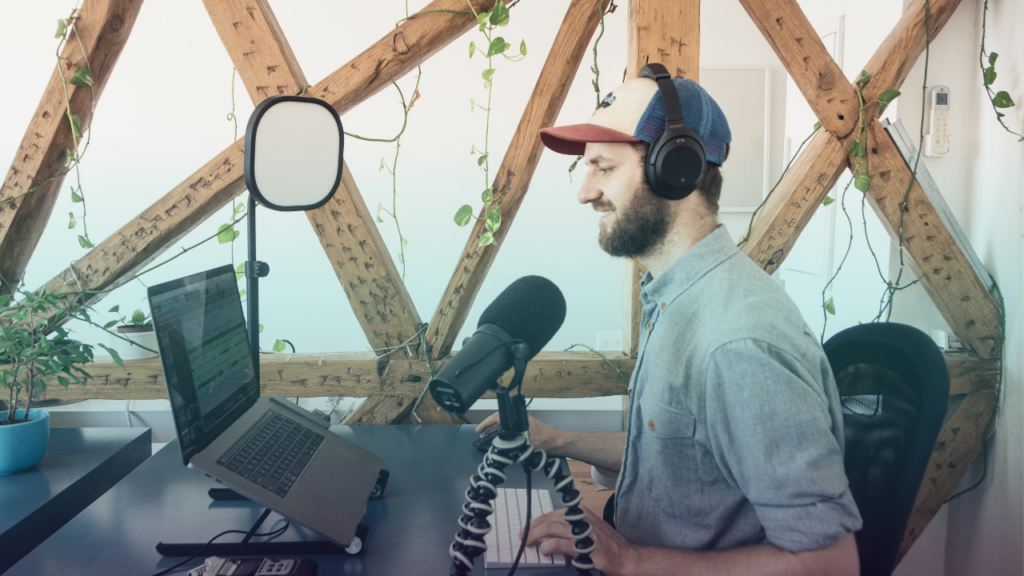
For years, starting a podcast usually meant making one major format decision: what should it sound like?
Today, there is another question to answer:
Should people also be able to watch it?
Video podcasts have become increasingly visible across YouTube, Spotify, social media, and other digital platforms. At the same time, traditional audio podcasts remain incredibly useful because they fit naturally into activities where watching a screen simply isn’t practical.
That leaves brands and new podcasters with a decision to make: audio vs video podcasts — which format is better?
There isn’t one answer that works for every show.
Audio may be the better choice for a podcast built around convenience, storytelling, or a simpler production process. Video can create additional opportunities for discovery, audience connection, and content repurposing. And increasingly, podcasters don’t necessarily need to choose one or the other.
The right format depends on your audience, content, resources, and goals.
What Is the Difference Between an Audio and Video Podcast?
An audio podcast is designed primarily as a listening experience. Episodes are distributed through podcast platforms and can be consumed while driving, exercising, commuting, cooking, working, or doing almost anything else.
A video podcast adds a visual component to that same experience. Depending on the production style, that might be a simple recording of the host and guest or a more polished multi-camera production with branded graphics, transitions, supporting visuals, and other elements.
The biggest difference isn’t simply whether a camera is turned on.
Adding video changes how the podcast can be consumed, distributed, produced, promoted, and repurposed.
That is why the decision should be based on strategy rather than simply following a format because it is popular.
The Advantages of Audio Podcasts
1. Audio Fits Naturally Into Everyday Life
One of podcasting’s greatest strengths has always been its flexibility.
Listeners don’t need to sit in front of a screen. They can listen while driving to work, walking the dog, exercising, cleaning the house, or travelling.
That creates an important advantage over many other forms of long-form content: podcasts can accompany another activity rather than compete with it.
For audiences that consume content primarily during commutes, workouts, or other screen-free moments, audio remains an extremely natural format.
2. Audio Can Be Simpler to Produce
Producing a professional audio podcast still requires planning, good recording practices, editing, and quality control.
But adding video introduces another layer of production considerations.
Lighting, camera positioning, framing, backgrounds, clothing, eye contact, visual continuity, storage, video editing, and export requirements all become part of the workflow.
Remote interviews can introduce additional challenges because every participant’s camera, lighting, internet connection, and environment can affect the final result.
If your team has limited production resources, starting with a strong audio experience can sometimes be more sustainable than trying to create a video show that is difficult to maintain consistently.
3. Audio Keeps the Focus on the Conversation
Not every podcast needs a visual component.
Some shows work precisely because the listener focuses entirely on the voices, ideas, stories, and chemistry between participants.
Narrative podcasts, expert interviews, educational discussions, and conversational formats can all work extremely well without video.
If showing the conversation doesn’t meaningfully improve the experience, video may add production complexity without adding equivalent value for the audience.
A useful question is:
What would viewers gain by watching this instead of listening?
If the answer is very little, audio may be all you need.
The Advantages of Video Podcasts
4. Video Creates More Ways to Discover the Podcast
Audio platforms remain important, but video creates another major discovery path.
A full episode can live on YouTube. A strong moment can become a YouTube Short, Instagram Reel, TikTok video, LinkedIn clip, or other piece of social content.
Instead of asking someone to discover a show only through a podcast app, video gives the same conversation more opportunities to appear where audiences already spend time.
This is particularly useful for newer podcasts that don’t yet have an established subscriber base.
Someone might discover a 45-second clip first, watch a longer segment later, and eventually become a regular listener.
The podcast episode becomes more than a single piece of content. It becomes the source material for an entire distribution system.
5. Video Can Strengthen the Audience’s Connection With Hosts and Guests
Voice creates familiarity.
Video adds another layer.
Facial expressions, body language, reactions, gestures, and the chemistry between speakers can all make a conversation feel more personal.
This can be especially valuable for podcasts built around interviews, personalities, thought leadership, or community.
Seeing a guest react to a difficult question or watching two hosts laugh at an unexpected comment adds context that audio alone cannot always capture.
For brands and organizations, video can also help audiences become more familiar with the people behind the organization.
That familiarity can contribute to trust over time.
6. Video Gives You More Content to Repurpose
A strong podcast conversation can produce much more than one episode.
With video available, a single recording could potentially become:
- A full video episode
- An audio podcast
- Short vertical clips
- YouTube Shorts
- Instagram Reels
- LinkedIn videos
- Quote graphics
- Written articles
- Email content
- Audiograms
- Transcripts
- Social posts
This makes video particularly attractive for organizations trying to build a broader content strategy around their podcast.
Instead of asking, “How do we promote this episode?”, the question becomes:
“How many useful pieces of content can this conversation become?”
That is a very different way to think about podcast production.
Audio vs Video Podcasts: A Practical Comparison
| Factor | Audio Podcast | Video Podcast |
| Audience convenience | Excellent for multitasking | Usually requires more visual attention |
| Production complexity | Generally simpler | Requires additional visual production |
| Equipment needs | Microphones and recording setup | Audio setup plus cameras, lighting and visual environment |
| Editing | Audio editing | Audio and video editing |
| Platform opportunities | Podcast listening platforms | Podcast platforms, YouTube and social video |
| Social repurposing | Possible, but more limited visually | Strong potential for clips and short-form video |
| Host/guest connection | Built through voice and conversation | Adds expressions and body language |
| Storage/file sizes | Generally smaller | Significantly larger |
| Best for | Convenient listening and audio-first storytelling | Discovery, personality and content repurposing |
Neither column automatically wins.
The important question is which advantages matter most for your particular podcast.
Is Video Better for Podcast Discovery?
Video can give a podcast more discovery opportunities, but simply adding cameras does not guarantee that more people will find the show.
Distribution still matters.
A 60-minute video uploaded without a compelling title, thumbnail, description, chapters, clips, or promotional strategy may attract very little attention.
The real opportunity comes from treating video as part of a larger content system.
For example, one interview might produce a full YouTube episode, several searchable clips answering specific questions, short vertical videos for social media, and written content based on the conversation.
Each asset creates another potential entry point.
This is also why podcast episodes are increasingly useful as searchable content libraries. A strong archive can contain years of expert answers, discussions, stories, and insights that continue to be discovered after the original publication date.
Video can expand the number of ways people enter that library.
Does a Video Podcast Need to Look Like a TV Show?
No.
One of the biggest misconceptions about video podcasting is that adding video automatically requires an elaborate studio, multiple cameras, and a large production team.
Production quality should match the goals and positioning of the show.
A professional business podcast may benefit from strong lighting, intentional framing, branded surroundings, multiple camera angles, and polished editing.
Another podcast may work perfectly well with a simpler visual setup.
What matters is that the production feels intentional.
Poor audio, distracting backgrounds, inconsistent lighting, awkward camera angles, and unreliable video can make a podcast feel less professional rather than more.
If you are adding video, it should contribute positively to the experience.
Audio Quality Still Comes First
There is an important rule for video podcasts:
A video podcast is still a podcast.
Viewers may tolerate a simple camera setup.
They are much less likely to tolerate audio that is difficult to understand.
Echo, background noise, inconsistent volume, poor microphones, and connection problems can quickly make a long conversation exhausting to follow.
That means adding video should never come at the expense of the listening experience.
Even if your primary distribution strategy includes YouTube and social video, many people may still consume the episode without actively looking at the screen.
Build the production around strong audio first, then use video to enhance it.
What About Remote Video Podcasts?
Remote recording makes it possible to interview guests almost anywhere in the world, but it also reduces some of the control you have over the recording environment.
One guest might have professional lighting and a high-quality microphone. Another might join from a laptop in a poorly lit room with background noise.
Preparation can make a significant difference.
Before recording, provide guests with simple guidance around microphone use, headphones, camera position, lighting, internet connection, background, notifications, and recording environment.
A short technical check before the actual interview can also identify issues before they become part of the final recording.
The goal isn’t to turn every guest into a production professional.
It’s to remove preventable distractions so the conversation remains the focus.
Should You Publish Both Audio and Video?
For many podcasts, this is increasingly the most interesting option.
You don’t necessarily need to choose between an audio podcast and a video podcast.
You can record the conversation once and create both experiences.
The audio version can be distributed through traditional podcast platforms for listeners who prefer convenience. The video version can be published on YouTube or other supported platforms for viewers who want the visual experience.
Short video clips can then support discovery across social channels.
This approach gives the audience more choice while allowing the production to create more value from the same conversation.
However, it only makes sense if your team has the resources to maintain both formats properly.
Publishing across more platforms isn’t automatically better if the additional workload makes the podcast inconsistent or unsustainable.
When Should You Choose an Audio-First Podcast?
An audio-first approach may make more sense when:
- Your audience primarily listens while multitasking
- The conversation doesn’t benefit significantly from visuals
- You want a simpler production workflow
- Your budget is limited
- Guests frequently record remotely from unpredictable environments
- Your show relies heavily on storytelling or narration
- You want to prioritize consistency before expanding production
Starting with audio doesn’t mean video can never be added.
It may simply mean building a strong foundation first.
When Should You Choose a Video Podcast?
Video may be particularly valuable when:
- Hosts or guests are an important part of the brand
- Facial reactions and body language improve the conversation
- YouTube is an important discovery channel
- Social clips are central to your marketing strategy
- You want to repurpose episodes into short-form video
- The podcast includes demonstrations or visual examples
- You already have the resources to produce video consistently
- Building audience familiarity and trust is a major objective
The strongest reason to choose video isn’t simply “everyone is doing video podcasts.”
It is having a clear plan for how the visual content will be used.
Don’t Choose a Format You Can’t Sustain
Podcasting rewards consistency.
A highly ambitious video format may look impressive for the first three episodes, but that doesn’t help much if the production workload makes episode four impossible to finish.
Before committing to a format, consider the complete workflow:
Planning → Recording → Editing → Approval → Publishing → Promotion → Repurposing
How much time does each episode require?
Who is responsible for each stage?
How frequently do you plan to publish?
How much post-production is realistic?
How many clips will you create?
Where will those clips be published?
Answering those questions before launch can prevent your production strategy from becoming more complicated than the podcast itself.
A sustainable format that produces 20 strong episodes is usually more valuable than an ambitious format that produces three.
Audio vs Video Podcasts: Which Is Better for Your Business?
If convenience, simplicity, and an audio-first audience are the priority, an audio podcast may be the better choice.
If discoverability, visual connection, YouTube distribution, and content repurposing are important to your strategy, video can create significant additional opportunities.
For many organizations, the strongest approach may be somewhere in the middle: record with video, distribute the full conversation in both formats, and selectively turn the strongest moments into additional content.
The technology is only part of the decision.
The better question is:
How does your audience want to consume the conversation — and what format gives your organization the best opportunity to keep creating it consistently?
At Canadian Podcasting Productions, we help organizations take podcasts from concept through recording, editing, post-production, and publication. Whether your strategy is audio-first, video-led, remote, on-site, or a combination of formats, the goal is the same: create a professional podcast experience that works for both the audience and the organization producing it.
Because the best podcast format isn’t simply the one with the most features.
It’s the one that helps a great conversation reach the right people.